When comparing lithium batteries, most buyers focus on capacity, voltage, warranty, and battery chemistry. However, one specification that is often overlooked is the IP Rating.
Whether you’re installing a lithium battery indoors or in a solar energy system, understanding the IP54 Rating can help you choose a battery that is better protected against dust and moisture.
In this guide, you’ll learn what an IP rating is, how to read it, what IP54 protection means, why many brands still use IP20 enclosures, and whether an IP54-rated lithium battery is suitable for outdoor use. IP ratings are standardized under IEC 60529 and use two digits to indicate protection against solids and water.
What is an IP Rating and How to Read It?
IP stands for Ingress Protection. It is an international classification system that measures how well an enclosure protects internal components from dust, solid objects, and water.
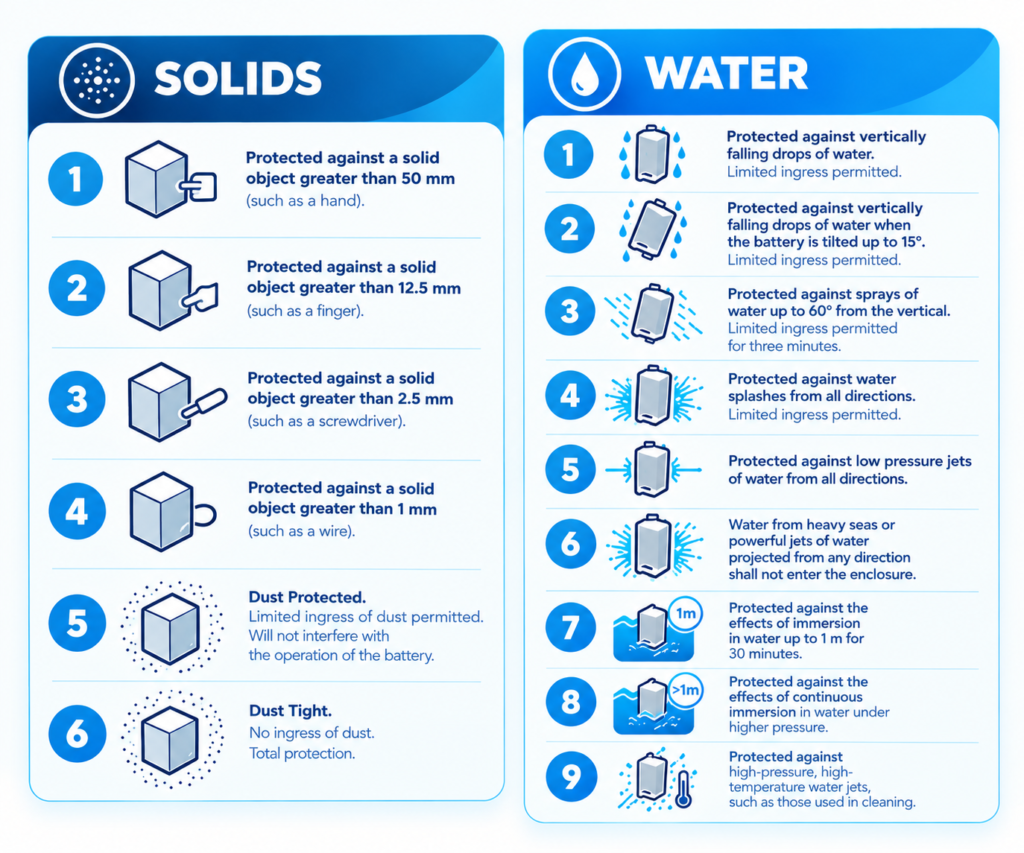
An IP code consists of two digits:
IPXY
- X = Protection against solids and dust
- Y = Protection against water
For example:
IP54
- 5 = Dust-protected
- 4 = Protection against water splashes
What Does IP54 Rating Protection on a Lithium Battery?
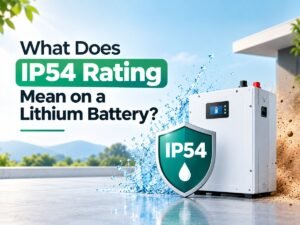
An IP54 Rating lithium battery is designed to protect sensitive battery cells, BMS electronics, and electrical connections from dust ingress and water splashes.
In an IP54 enclosure:
Dust Protection (5): The battery is protected against harmful dust entering the enclosure.
Water Protection (4): The battery is protected against water splashes coming from any direction.
This makes IP54 lithium batteries suitable for residential, commercial, and many solar energy storage applications.
IP54 rated protection helps:
- Reduce dust accumulation inside the battery cabinet
- Protect electronic components from moisture
- Improve long-term reliability
- Support installation in more challenging environments
- Increase system durability
Many modern energy storage systems use higher IP ratings because battery systems are often installed in garages, utility rooms, warehouses, or semi-outdoor locations.
Looking for the best solar company in pakistan? You can explore Global Energy Solutions pvt. ltd
IP20 vs IP54 Rating Lithium Battery
Difference Between IP20 vs IP54 lithium Batteries:
Feature | IP20 | IP54 |
Dust Protection | Basic | Dust Protected |
Water Protection | None | Splash Resistant |
Indoor Installation | Yes | Yes |
Covered Outdoor Installation | Not Recommended | Suitable |
Moisture Resistance | Low | Better |
Environmental Protection | Basic | Enhanced |
Brands Offer | Dyness, Pylontech | GWM Energy |
Why Do Many Brands Use IP20 Instead of IP54 Rating Lithium Batteries?
Many manufacturers continue to use IP20 enclosures for several reasons:
Lower Manufacturing Cost
IP20 enclosures require less sealing and fewer protective components.
Better Airflow
Indoor battery systems may benefit from easier ventilation and cooling.
Designed for Indoor Installation
Many lithium batteries are intended for:
- Electrical rooms
- Server rooms
- Utility rooms
- Indoor solar installations
Since these locations are dry and protected, manufacturers may not need a higher IP rating. IP20 products are intended for dry indoor environments and do not provide water protection.
Is IP54 Rating Suitable for Outdoor Use?
Yes, IP54 Rating is suitable for outdoor use in many situations, especially when the battery is installed under a shade, canopy, or protective structure.
Examples:
- Covered solar installations
- Utility rooms
- Garages
- Commercial buildings
- Semi-outdoor energy storage areas
However, IP54 is not intended for direct exposure to heavy rain, flooding, or water jets.
GWM Energy IP54 Rating Lithium Batteries:
GWM Energy’s IP54-rated lithium batteries are designed to provide enhanced protection against dust and water splashes while supporting residential and commercial energy storage applications.
Benefits include:
- Better environmental protection
- Suitable for indoor and covered outdoor installations
- Enhanced durability
- Improved reliability in dusty environments
- Better compatibility with solar energy systems.
you can check all models of GWM Energy Lithium Batteries Model, Which is fall in IP54 Rating.
The IP54 Rating is an important specification that indicates how well a lithium battery is protected against dust and water splashes. Understanding IP ratings helps users choose the right battery for their installation environment.
While IP20 batteries remain a practical choice for indoor installations, IP54-rated lithium batteries provide additional protection and greater installation flexibility. For users installing batteries in garages, utility rooms, or covered outdoor solar systems, an IP54 enclosure can offer valuable protection against dust and moisture.