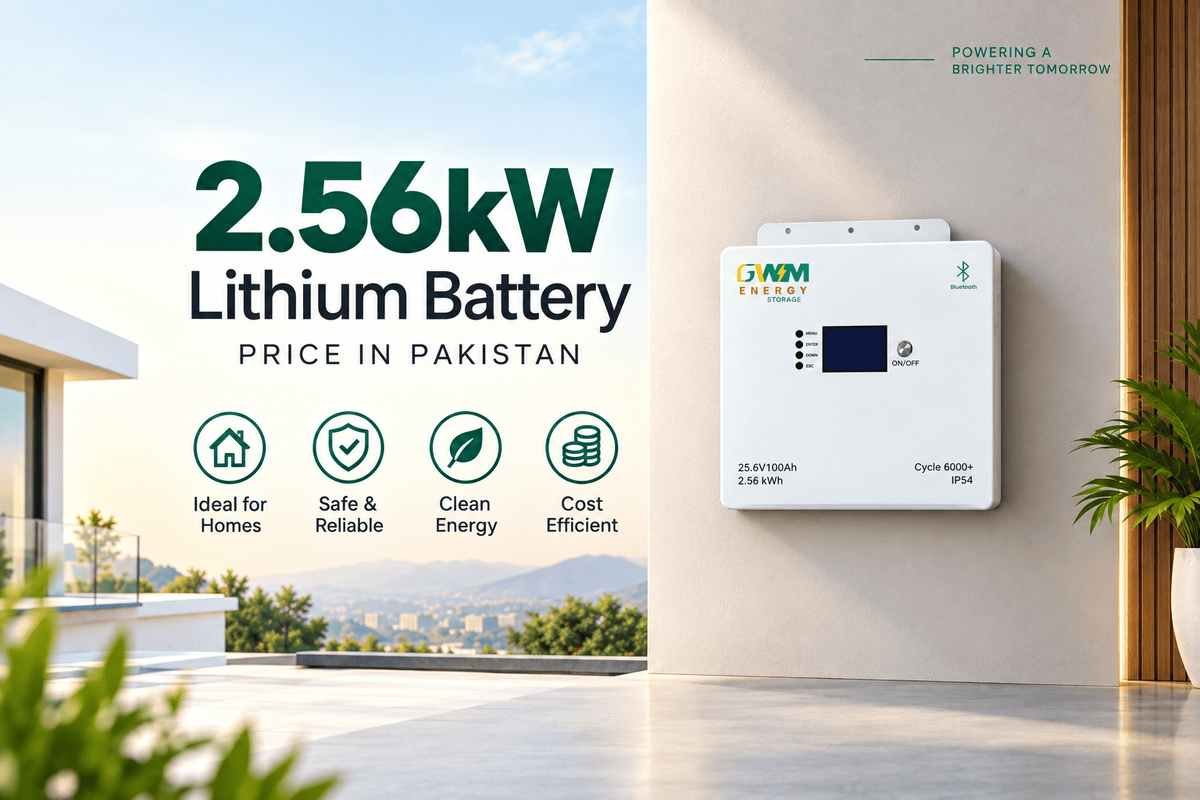
The 2.56kW lithium battery price in Pakistan in 2026 can vary depending on battery chemistry, cell quality, usable capacity, BMS features, warranty, and brand. When comparing prices, it is important not to look at the upfront cost alone.
A quality LiFePO4 battery can offer a longer cycle life, better efficiency, and lower maintenance than traditional lead-acid or tubular batteries. For homeowners looking for a compact energy storage solution, a 2.56kW lithium battery can provide dependable backup while taking up less space and requiring minimal maintenance.
Before buying a 2.5kW lithium battery , it is also important to check whether the battery is compatible with your solar inverter and whether its voltage and charging requirements match your system. The right battery can help store excess solar energy during the day and make it available when sunlight is unavailable or during load-shedding. In the following sections, we will look at the 2.56kW lithium battery price in Pakistan, estimated backup time, key specifications, inverter compatibility, and the factors you should consider when choosing a lithium battery for your home solar system.
What Is a 2.56kW Lithium Battery?
A 2.56kW lithium battery is an energy-storage battery designed to store electricity generated from solar panels or supplied by the grid and provide that stored energy when required.
For example, a battery with a nominal capacity of 2.56kWh can theoretically store:
2.56kWh ≈ 2.56 units of electricity
The actual usable energy will depend on the battery’s usable capacity, depth of discharge, inverter efficiency, and operating conditions.
Because of its relatively compact capacity, a 2.56kWh battery is generally more suitable for essential-load backup rather than running an entire home with multiple high-power appliances.
How Much Backup Can a 2.56kW Battery Provide?
Backup time depends mainly on the total load connected to the battery.
| Average Load | Theoretical Backup Time |
| 300W | About 8.5 hours |
| 500W | About 5.1 hours |
| 800W | About 3.2 hours |
| 1,000W | About 2.6 hours |
| 1,500W | About 1.7 hours |
These are theoretical calculations. Actual backup time can be lower because of inverter losses, usable battery capacity, battery operating limits, and changes in appliance consumption.
For a typical home, this size of battery can be considered for loads such as LED lights, fans, Wi-Fi routers, and other small electronics.
GWM Energy 2.56kW Lithium Battery: Features and Specifications
If you are looking for a 2.56kWh lithium battery in Pakistan, GWM Energy offers a compact 25.6V/100Ah LiFePO₄ battery designed for solar backup and energy-storage applications.
Key Features
- LiFePO₄ Chemistry: Provides a stable and reliable solution for repeated charging and discharging.
- Samsung Prismatic Cells: High-quality cells help maintain better consistency and long-term performance.
- 6,000+ Life Cycles: Designed for long-term use under suitable operating conditions.
- Intelligent BMS: Provides protection against overcharge, over-discharge, overcurrent, and temperature-related conditions.
- 100A Charge & Discharge: Supports high charging and discharge capability when matched with a suitable inverter.
- Bluetooth Monitoring: Allows users to monitor important battery information through a compatible mobile application.
- Low Maintenance: Unlike tubular batteries, it does not require regular water filling.
For users who need more backup capacity, you can also explore our guides on [5kW lithium battery price in Pakistan] and [16kW lithium battery price in Pakistan] to compare larger battery options.
Overall, the GWM Energy 2.56kW lithium battery is a practical option for small solar systems where compact size, low maintenance, and reliable backup are important.
Which Inverters Can a 2.56kW Lithium Battery Work With?
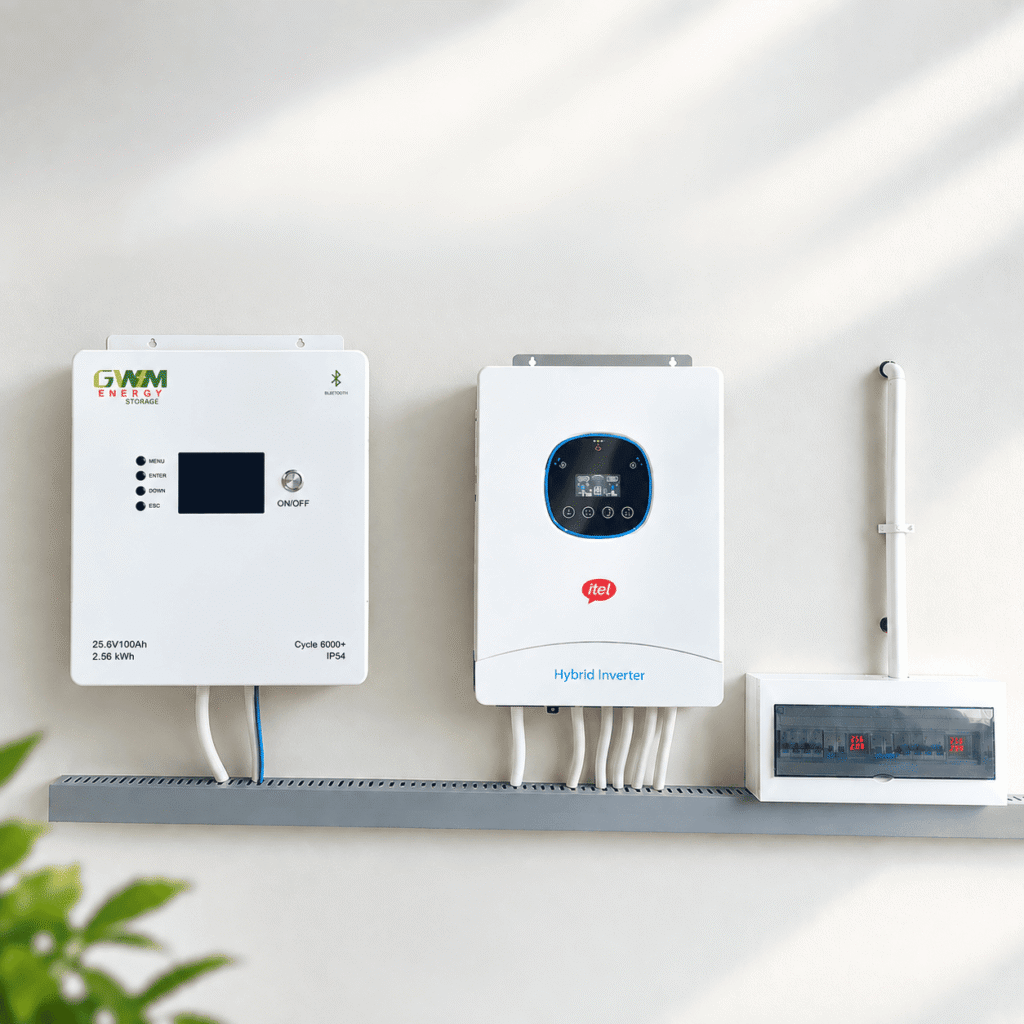
A 2.56kW GWM Energy battery in the 25.6V class should be paired with an inverter that supports the battery’s voltage range and lithium-battery operating requirements.
Before purchasing, check:
- Inverter DC battery voltage
- Compatible operating voltage range
- Maximum charging current
- Maximum discharge current
- Lithium battery/BMS compatibility
- Communication requirements such as CAN or RS485, if required
A single 25.6V battery should not be directly connected to a 12V or 48V/51.2V inverter. The inverter and battery configuration must be designed to work together.
For comparison, GWM Energy’s 5.12kWh model is a 51.2V 100Ah battery and supports up to 10 units in parallel, so it belongs to a different voltage class.
| Feature | 2.56kWh | 5.12kWh | 16.08kWh |
| Typical use | Essential home loads | Larger home/small business | Extended home/commercial backup |
| Nominal voltage | 25.6V | 51.2V | 51.2V |
| Storage capacity | 2.56kWh | 5.12kWh | 16.08kWh |
| Battery chemistry | LiFePO₄ | LiFePO₄ | LiFePO₄ |
| Cycle lifeInverter Requirement | 6,000+Compatible 24V-class inverter | 8,000+Compatible 48V/51.2V inverter | 10,000+Compatible 48V/51.2V inverter |
| Monitoring | Bluetooth | Wi-Fi + Bluetooth | Wi-Fi + Bluetooth |
| Expansion | Up to 5units in parallel | Up to 10 units in parallel | Up to 10 units in parallel |
| Best suited for | Basic backup | Higher backup demand | Extended backup & larger systems |
Why Choose GWM Energy Lithium Battery?
When choosing a lithium battery, price is not the only thing to consider. Cell quality, BMS, cycle life, monitoring, and warranty also matter.
1. High-Quality LiFePO₄ Cells
GWM Energy uses LiFePO₄ cells, with each cell having a nominal voltage of around 3.2V. The quality and consistency of these cells play an important role in battery performance and life.
2. PACE BMS
The battery uses a PACE Battery Management System (BMS) to monitor important battery parameters and provide protection against issues such as overcharge, over-discharge, overcurrent, and temperature-related conditions.
3. Long Life Cycles
A higher cycle rating means the battery is designed to handle more charge and discharge cycles, making it suitable for regular solar use.
4. Bluetooth & Wi-Fi Monitoring
Bluetooth and Wi-Fi monitoring allow users to check important battery information and system status through a compatible monitoring application.
5. Strong Charge & Discharge Capability
The battery’s charge and discharge capability should match the inverter and expected load. This helps the system operate properly without putting unnecessary stress on the battery.
6. Expansion Options
For larger energy-storage requirements, compatible GWM Energy battery models can be connected in parallel to increase total storage capacity.
7. Warranty & After-Sales Support
A lithium battery is a long-term investment, so warranty and after-sales support are also important when choosing a battery for your solar system.
The 2.56kW lithium battery price in Pakistan should not be evaluated on price alone. A better comparison includes battery chemistry, cell quality, cycle life, BMS, charge/discharge capability, monitoring, inverter compatibility, warranty, and after-sales support.
For users who need a compact battery for essential household backup, a 2.56kWh LiFePO₄ battery can be a practical alternative to traditional tubular batteries. For higher backup requirements, moving to a 5.12kWh or 16.08kWh battery provides greater energy storage and more flexibility.
Before purchasing, always confirm the battery’s latest specifications, compatible inverter list, warranty, and current market price with the supplier.